
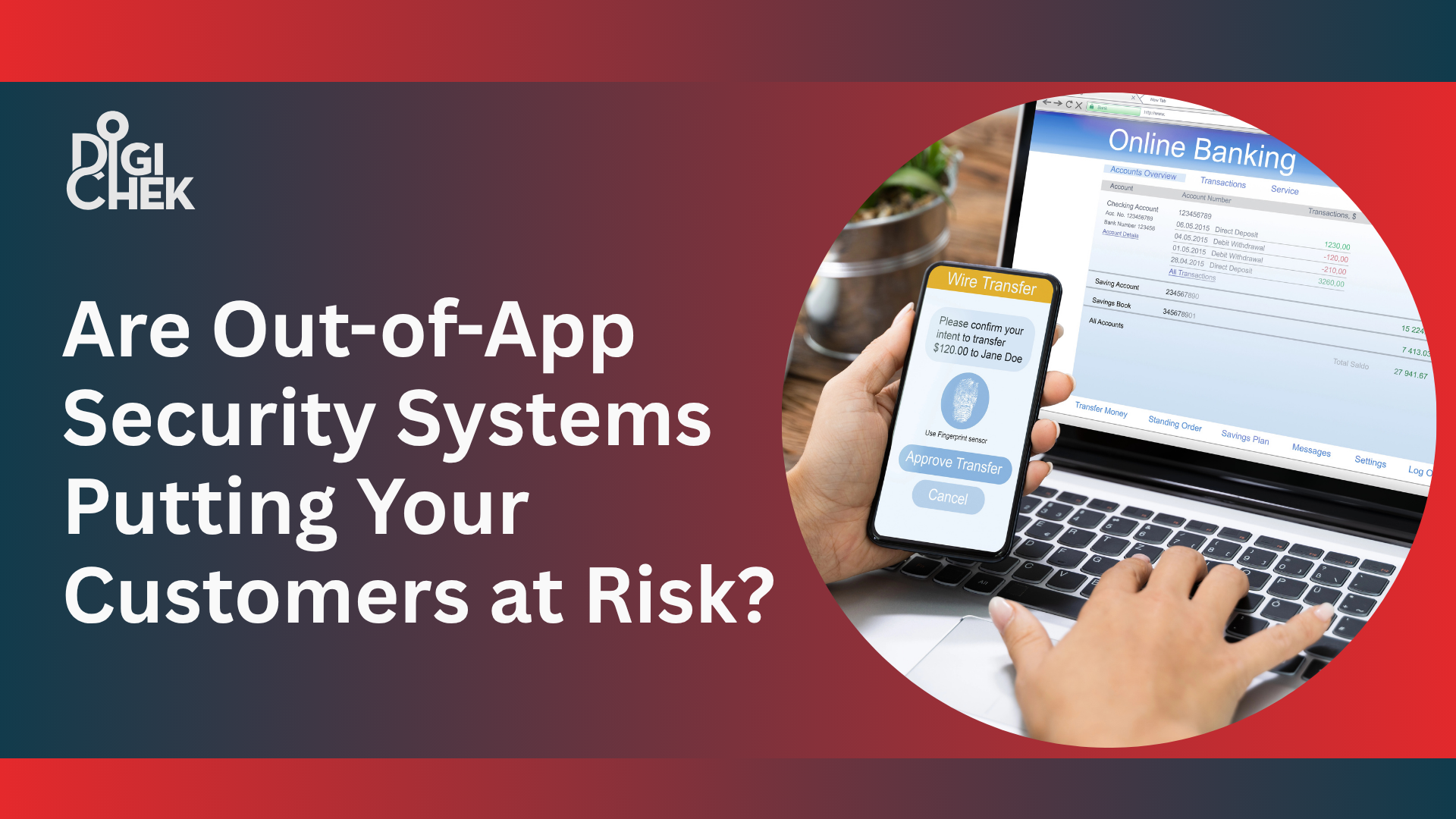
Picture this: a customer tries to log in to their mobile banking app while travelling. Their phone is in roaming mode, the 2FA code SMS won’t come through in time, and their authenticator app was never reinstalled on the new device. Frustrated, they abandon the session (and possibly your service) and just ask a friend for some cash.
Out-of-app security methods like OTPs, email codes, and 2FA apps are increasingly seen by users as more hassle than help. While they aim to secure, they often exclude. And in regulated industries like finance, the stakes for both access and accountability are higher than ever, making the tension between security, UX, and users high.
The Hidden Friction of 2FA and Out-of-App Codes
Security experts may love multi-factor authentication, but users often hate it.
- SMS codes are susceptible to SIM-swapping and phishing.
- Email verifications can be slow or misdirected to junk folders.
- Authenticator apps require initial setup, backup keys, and compatible devices, all of which can lock users out.
In fact, some users will actively avoid services with excessive friction, creating a false sense of security at the cost of usability.
The Financial Sector’s Accessibility Gap
Australia’s Disability Discrimination Act 1992 prohibits digital exclusion, but many financial security systems still alienate:
- Older Australians managing superannuation through modernised apps
- Regional users with unreliable internet connectivity
- People with disabilities who use legacy or adaptive devices
- Neurodivergent users overwhelmed by complexity
Regulators now expect digital inclusion to be baked into compliance, not added as an afterthought. Accessibility might feel like a moral imperative that can be pushed down the line to after the product is developed, but it’s actually a regulatory and reputational imperative too. This means it needs to be considered from the moment a product or service is ideated.
DigiChek Keys: Security That’s Familiar, Not Frustrating
DigiChek turns the familiar password model into a secure, privacy-preserving identity layer. Users generate a unique DigiChek Key themselves through one of our independent third-party verifiers, meaning there is:
- No device-specific setup
- No SMS or email reliance
- No apps to download or maintain
The result is a consistent experience across any device, in any language, and at any level of digital literacy. Even users in low-bandwidth environments can authenticate securely.
The DigiChek Key is never stored outside the DigiChek system. It’s never transmitted. It cannot be phished, spoofed, or intercepted. If a user forgets it, they can reset it using personal security questions they create themselves, no helpdesk or recovery codes required.
Seamless Authentication Across Platforms
A banking customer in a rural area logs into their online account on a public library computer. There’s poor mobile reception, and little chance an authenticator app will work on their phone. With DigiChek, they simply enter their Key.
The system verifies their age or identity using only three stored data points (name, date of birth, place of birth) without exposing those details to the bank or any third party.
Simpler Can Be Safer
Complexity doesn’t guarantee safety, but it often guarantees exclusion. Exclusion causes poor reputation, lost revenue, and missed opportunities.
DigiChek bridges the divide between usability and security, enabling banks and fintechs to provide strong authentication without frustrating or losing legitimate users.
If you’re looking for a frictionless, inclusive, and privacy-preserving alternative to outdated 2FA systems, DigiChek is now partnering with forward-thinking financial institutions. Let’s build the future of secure access together.